
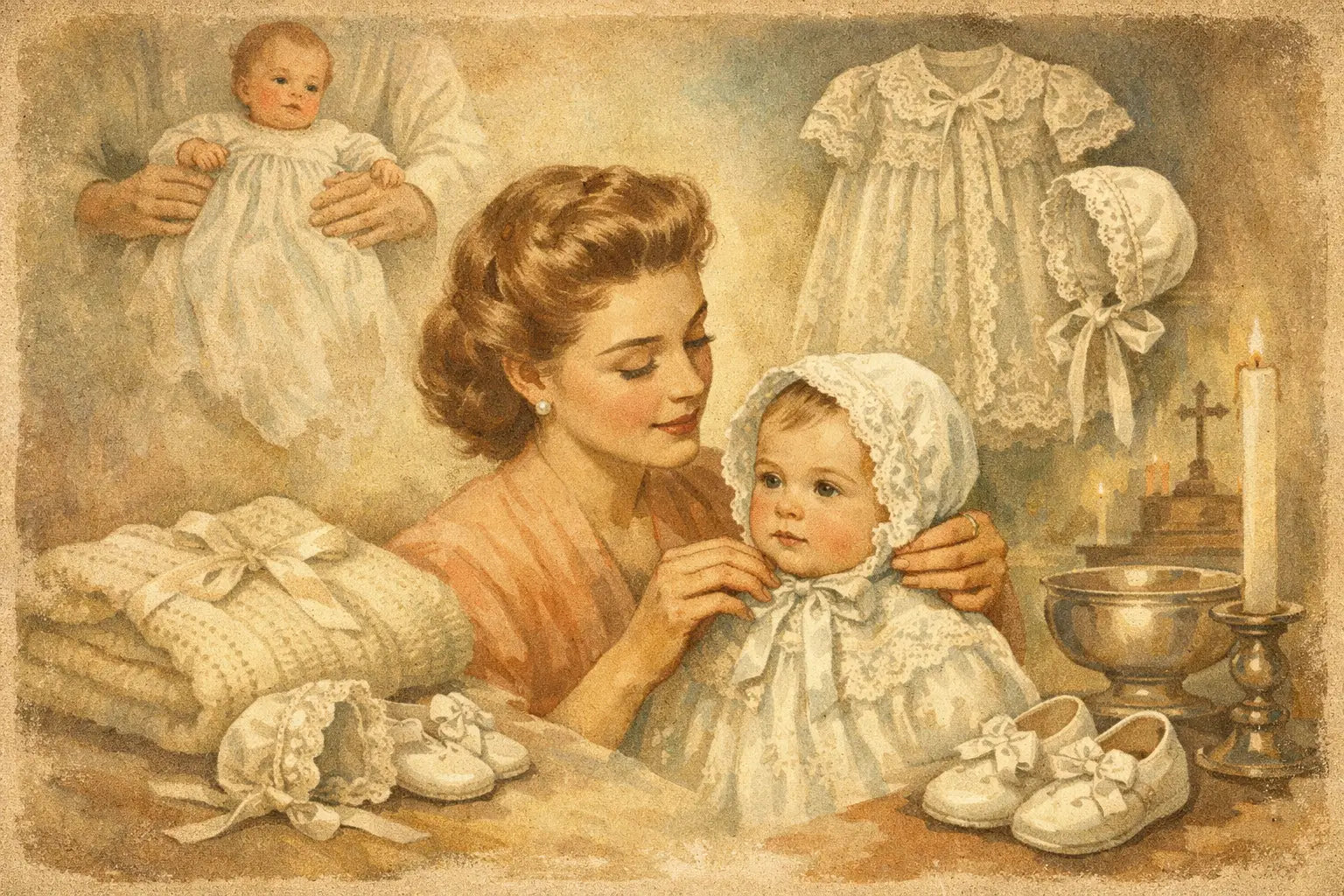
A christening outfit may look perfectly light and delicate in a family photo, but the walk from the car, a cool church sanctuary, and a long ceremony can feel very different for a baby. Knowing how to layer christening outfits lets you protect your little one’s comfort without covering the handmade details, white fabric, and meaningful finishing touches chosen for such a sacred occasion.
The goal is not to add as many pieces as possible. It is to create a soft, polished combination that can be adjusted quietly as the temperature changes. When each layer has a purpose, your baby can stay warm and content while looking beautifully prepared for baptism.
Start With the Christening Outfit as the Centerpiece
Choose the gown, dress, romper, or suit first, then build the layers around it. A traditional long christening gown often needs less visible layering because its full skirt already creates coverage. A shorter dress, boys’ outfit, or lightweight romper may need a little more help, especially during cooler months.
Pay attention to the fabric. Cotton, linen, and lightweight blends are lovely for spring and summer ceremonies but may need a warmer base layer. Satin and embellished fabrics can feel dressier and offer more coverage, yet they are not always warm enough on their own. The best choice depends on the church temperature, the season, and how long your family expects to be outdoors.
Keep the ceremonial outfit visible whenever possible. A well-chosen underlayer should support the look rather than compete with lace, embroidery, heirloom details, or a carefully coordinated bonnet.
How to Layer Christening Outfits Without Adding Bulk
The most comfortable christening layers are soft, breathable, and easy to remove. Start closest to the skin and work outward, checking that every piece allows your baby to move, be held, and rest comfortably.
Begin with a soft base layer
A plain white cotton bodysuit or undershirt is often the simplest starting point. It provides a gentle barrier beneath a dress or gown and helps prevent seams or decorative fabrics from irritating sensitive skin. For boys’ baptism outfits, a white bodysuit can create a neat foundation beneath a vest, jacket, or romper.
For cold-weather ceremonies, consider a long-sleeve bodysuit or a lightweight cotton union suit. Avoid bulky thermal layers under fitted formalwear. They can bunch at the neckline, sleeves, or waist and make the outer outfit sit awkwardly in photographs.
Add hosiery or soft leggings when needed
White tights, stockings, or footed leggings add warmth while preserving the traditional all-white look. They are especially helpful with short christening dresses, bloomers, and tailored boys’ sets. Choose a smooth, comfortable waistband and a size that is not overly snug around the tummy.
For a long gown, hosiery may not be seen, but it still offers welcome warmth. If the ceremony takes place in summer or a warm sanctuary, bare legs with soft booties can be more comfortable. There is no need to follow a rigid rule when your baby’s comfort says otherwise.
Use a cardigan, sweater, or jacket as the removable layer
A fine-knit white cardigan is one of the most useful layers for a baptism. It looks appropriate in family photographs, adds warmth during arrival and departure, and can be slipped off before the water portion of the ceremony if the church is warm.
For boys, a soft white or ivory jacket can add structure over a shirt and trousers without looking too casual. Select a style with a gentle lining and easy closures. Buttons are classic, while simple snaps can be more practical for younger babies. Avoid stiff coats or heavy outerwear that may make it difficult to hold your child close during the service.
Keep Tiny Hands, Feet, and Heads Comfortable
Babies lose warmth quickly through their extremities, so accessories are more than decorative details. They also make layering feel complete and intentional.
Soft white booties are often the best choice for infants, whether they are wearing a gown or a tailored outfit. They are gentler than structured shoes, easier to keep on, and pair beautifully with stockings or socks. Older babies who are standing or walking may need soft-soled white shoes with secure straps and enough room for socks.
A bonnet, hat, or headband should suit the season and the outfit’s formality. A delicate bonnet can frame a traditional gown beautifully, while a simple headband can complement a christening dress without overwhelming it. In cooler weather, bring a warmer knit hat for travel, then change into the ceremonial headpiece before entering the church. This keeps the baptism look elegant while protecting your baby from the outdoor chill.
Let the Blanket Do Some of the Work
A beautiful white christening blanket is one of the most flexible layers a family can bring. It can cover your baby in the car seat, during outdoor photos, or while waiting for the ceremony to begin. It also becomes a comforting item when your little one is being held by a parent, godparent, or grandparent.
A blanket is especially valuable when the temperature is unpredictable. Instead of dressing your baby in too many permanent layers, use the blanket for warmth before and after the service. Then remove it easily when photographs begin or when the church feels warmer than expected.
For a coordinated look, choose a blanket that complements the gown or outfit rather than matching every detail exactly. Soft white, ivory, or a subtle embroidered design usually feels timeless and lets the baptism attire remain the focus.
Consider the Season and the Church Setting
A spring christening can mean cool mornings and warm afternoons. Summer services may involve strong air conditioning indoors, even when the weather outside is hot. Fall and winter baptisms often call for a true outer layer, especially in northern states and Canada.
For warm-weather celebrations, keep the base layer light and bring a cardigan and blanket as backups. For colder months, use a long-sleeve base layer, stockings or socks, a knit cardigan or jacket, and a blanket for travel. If your baby will wear a formal coat outside, choose one that is easy to remove before the ceremony so it does not hide the special outfit for every photo.
Churches vary widely, too. Older stone buildings can stay cool year-round, while smaller chapels may feel warm once family and friends arrive. Ask the church coordinator what to expect, but pack an extra removable layer even if you receive a reassuring answer. Babies are wonderfully unpredictable, and being prepared is a gift to everyone attending.
Plan for the Ceremony, Not Only the Photos
A christening outfit should look lovely from the first photograph to the final family embrace, but it also needs to work during the ceremony itself. Make sure the neckline is accessible if your church’s tradition calls for anointing or baptismal water near the head or chest. Avoid adding scarves, high collars, or layers that are difficult to move aside gracefully.
Think about diaper changes as well. A beautiful gown is not much help if it requires removing several complicated pieces during a rushed moment. Bodysuits with snap closures, easy-on booties, and cardigans that open fully at the front make a genuine difference. Keep a spare bodysuit, clean socks, and an extra layer in the diaper bag in case of spills.
If the outfit includes a family heirloom, protect it by using the base layer and blanket strategically. This can reduce direct contact with skin, milk dribbles, or messy hands while preserving the heirloom’s delicate fabric. It is a practical way to honor tradition without asking a baby to be perfectly tidy.
Coordinate Layers With Meaningful Accessories
The finest christening looks feel cohesive, not overstyled. If the gown features ornate lace, choose simple booties and a quiet cardigan. If the outfit is clean and tailored, a delicate cross necklace, embroidered blanket, or ceremonial candle set can add meaning without making the clothing feel busy.
White remains the most traditional choice, representing purity, new life, and faith. Ivory and very pale neutral tones can also work beautifully, particularly when they complement handmade lace or family garments. The key is consistency: choose layers that belong to the same soft, ceremonial palette.
When selecting a complete look from a specialist such as Burbvus Christening, it can be easier to find complementary pieces that share the same sense of tradition and quality in every stitch. Still, your baby does not need every accessory at once. A few well-chosen layers will always feel more graceful than a crowded outfit.
Before you leave for that special day, dress your baby in the full outfit at home for a few minutes. Check the sleeves, waistband, booties, and neckline while they are sitting, stretching, and being held. Then pack one removable warm layer and one backup base layer. With that simple preparation, you can focus less on the temperature and more on the blessing, the family gathered close, and the memory you are creating together.
Share:
Baptism Gown Fabric Guide for a Beautiful Day
How to Clean Baptism Shoes Without Damage