
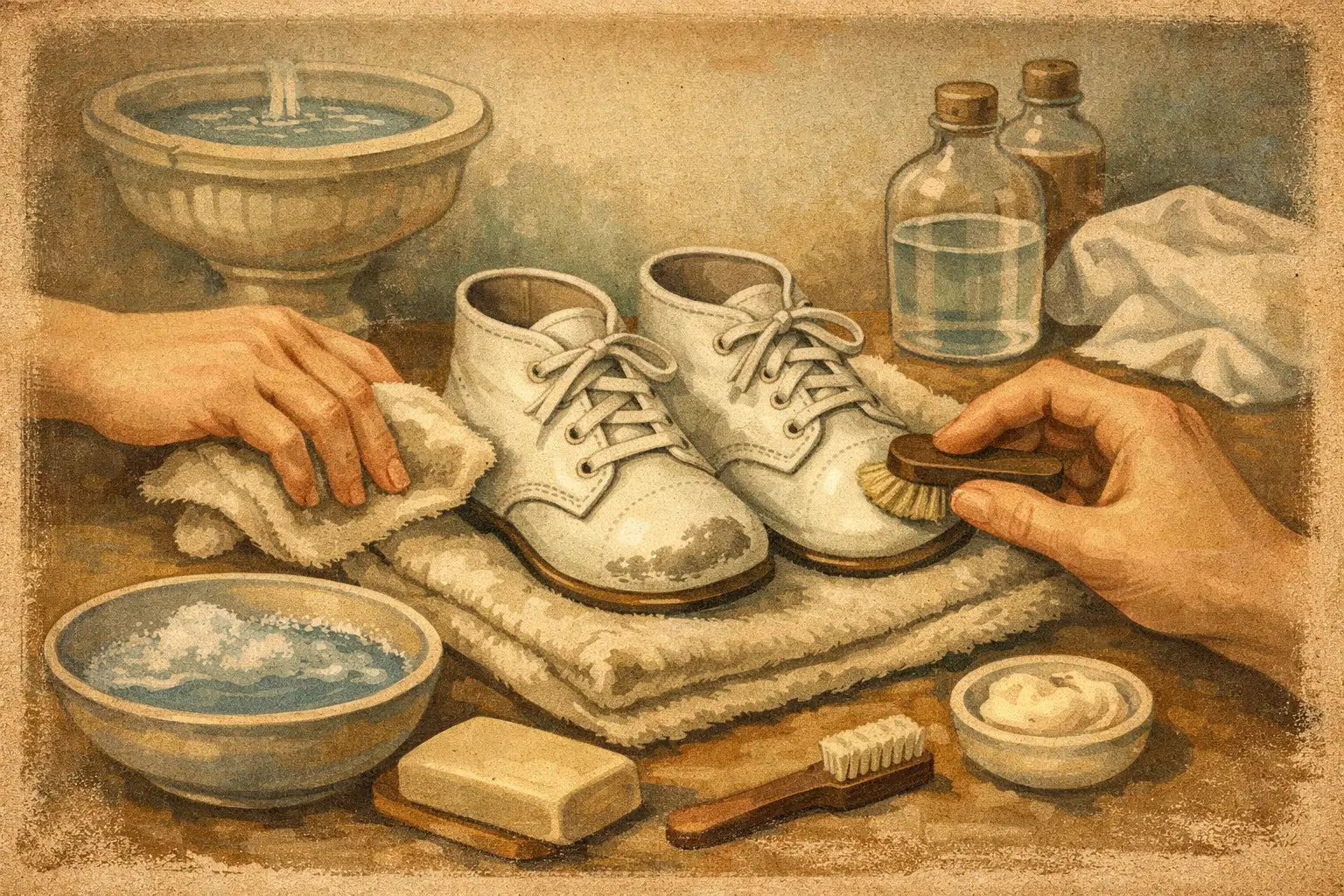
A tiny scuff on a white baptism shoe can feel surprisingly noticeable when every detail has been chosen with such care. Knowing how to clean baptism shoes properly helps you protect a meaningful keepsake while keeping your little one’s look polished for the ceremony, family photographs, and celebrations that follow.
Baptism shoes and booties are often made from delicate materials, including soft leather, satin, cotton, lace, and imitation leather. Some have bows, embroidery, rhinestones, or tiny pearl details that need an especially gentle touch. The best method depends on the material and the type of mark, so begin slowly rather than treating every shoe like an everyday sneaker.
Start With the Care Label and a Gentle Inspection
Before using water or any cleaner, check the shoe’s label, packaging, or care instructions. If the material is not identified, inspect a less visible area, such as the inside edge of the tongue or heel. A soft, dry microfiber cloth is often all that is needed to lift dust from shoes that have been stored before the baptism.
Look closely at the stain as well. Surface dust, a light scuff, a splash of milk, and a dried food stain should not be handled the same way. If a shoe is handmade, heavily embellished, or made of satin or lace, avoid soaking it. Excess moisture can leave rings, loosen adhesive, or change the shape of a soft baby shoe.
Before cleaning the visible area, test your method on a hidden spot. Let that small area dry completely. This simple step gives you confidence that the material will not discolor or stiffen.
How to Clean Baptism Shoes by Material
Soft leather baptism shoes
For smooth leather shoes, first wipe away loose dust with a dry cloth. Then dampen a clean, soft cloth with a small amount of lukewarm water and a drop of mild soap. The cloth should be barely damp, never dripping. Gently wipe the stained area using small circular motions, then wipe again with a separate cloth lightly dampened with plain water.
Pat the shoe dry with a towel and allow it to air-dry naturally, away from direct sunlight, radiators, or a hair dryer. Heat can dry out leather and cause cracking. Once completely dry, a tiny amount of leather conditioner may be appropriate for smooth leather, but avoid applying it to suede, fabric-lined shoes, or shoes with delicate decorative trim.
White leather can show gray marks from car seats, floors, or stroller footrests. For these light scuffs, start with the soap-and-water method. A white eraser designed for leather may help with a stubborn mark, but use very light pressure and test it first. Strong stain removers and household disinfecting wipes can strip the finish from delicate white leather.
Satin, silk-look, and lace shoes
Satin baptism shoes deserve the most caution. Water can create visible marks on satin, particularly on ivory, white, and pale blush shades. For a small dry mark, use a soft dry cloth or a very soft baby brush to gently lift surface debris.
If there is a fresh spot, blot it immediately with a clean white cloth. Do not rub, because rubbing can spread the stain or flatten the fabric’s sheen. For a more noticeable stain, lightly dab with a cloth that has been moistened with distilled water. Use as little moisture as possible, working from the outside of the stain toward the center.
Do not use bleach, whitening sprays, or stain pens on satin or lace. Even products labeled for white fabrics may leave yellowing, a water ring, or a patch that looks different in photographs. If the shoe has a significant stain and holds sentimental value, professional cleaning is the safer choice.
Fabric, cotton, and canvas booties
Soft fabric booties are usually the easiest baptism footwear to refresh. Brush away dry dirt first, then spot-clean with a mixture of lukewarm water and a tiny amount of gentle, fragrance-free detergent. Dab the solution onto the mark with a soft cloth or cotton swab. Follow with a clean damp cloth to remove soap residue.
Avoid placing structured fabric shoes in the washing machine unless their care label specifically says it is safe. The agitation can misshape the sole, fray lace, and detach bows or decorative pieces. For unstructured cotton booties, hand washing may be suitable, but only after checking the label. Rinse carefully, press out water without twisting, and reshape them while damp.
Imitation leather and patent finishes
Imitation leather and patent-style shoes generally respond well to a soft cloth dampened with water and mild soap. Wipe gently, then dry immediately with a second cloth. These finishes can scratch, so skip abrasive sponges and scrubbing brushes.
For a glossy patent finish, buff gently with a dry microfiber cloth after cleaning. This restores a neat shine without adding oils or polishes that may leave a cloudy residue.
Treat Common Baptism-Day Stains Promptly
The most successful stain treatment is usually the gentlest one done quickly. During a long morning of dressing, travel, and visiting with family, keep a clean white cloth in the diaper bag. It can be used to blot a fresh spill before it sets.
Milk, formula, and drool should be blotted first, then cleaned with a barely damp cloth if the material allows. For food residue, carefully lift away any solids with the edge of a spoon or a clean fingernail before dabbing the area. Never scrape with a sharp object.
Grass or dirt marks often need patience more than pressure. Let mud dry fully, then brush away as much as possible with a soft brush. Clean only the remaining mark with the material-appropriate method. Trying to wipe wet mud tends to push it deeper into pale fabric.
For wax from a baptism candle, allow the wax to harden. Gently lift away what you can with a fingernail, taking care around stitching and embellishments. Avoid heat-based methods on baby shoes, since warmth can melt adhesives, damage synthetic materials, or affect satin’s finish.
What Not to Use on Delicate White Shoes
When a shoe is white, it is tempting to reach for the strongest cleaner in the house. That approach can do more harm than good. Avoid bleach, hydrogen peroxide, nail polish remover, alcohol-based cleaners, toothpaste, and harsh all-purpose sprays. These products may cause yellowing, remove color from trim, or leave the material dry and brittle.
A magic eraser can also be too abrasive for satin, soft leather, or glossy finishes. It may remove a scuff, but it can leave behind a dull patch that is more visible than the original mark. For precious ceremony shoes, gentle cleaning and a little restraint are part of caring for the craftsmanship.
Dry and Store Shoes With Care
After cleaning, let baptism shoes air-dry in a well-ventilated room. Stuff soft leather or fabric shoes lightly with plain white tissue paper to help them hold their shape. Do not use newspaper, as ink can transfer to light-colored linings.
Once dry, store them in a clean box or breathable fabric bag, away from damp basements, direct sunlight, and plastic containers that can trap moisture. Keep bows and delicate details from being crushed by placing tissue between the shoes. If the shoes are being saved as a family memento, add acid-free tissue paper and check them occasionally for discoloration.
A Small Preparation That Brings Peace of Mind
Cleaning is easiest before the baptism day, not during the rush of getting everyone ready. A quick inspection a few days ahead gives you time to remove storage dust, address a small mark, and make sure the shoes still fit comfortably with socks or stockings. At Burbvus Christening, we know that these small finishing touches help create a beautifully coordinated look worthy of such a sacred family milestone.
Set the freshly cleaned shoes aside with the outfit, blanket, and other ceremony essentials. Then, when that special day arrives, you can focus less on a tiny mark and more on the blessing, the photographs, and the loved ones gathered around your child.
Share:
How to Layer Christening Outfits Beautifully
Baptism Candle Reviews for a Meaningful Ceremony