
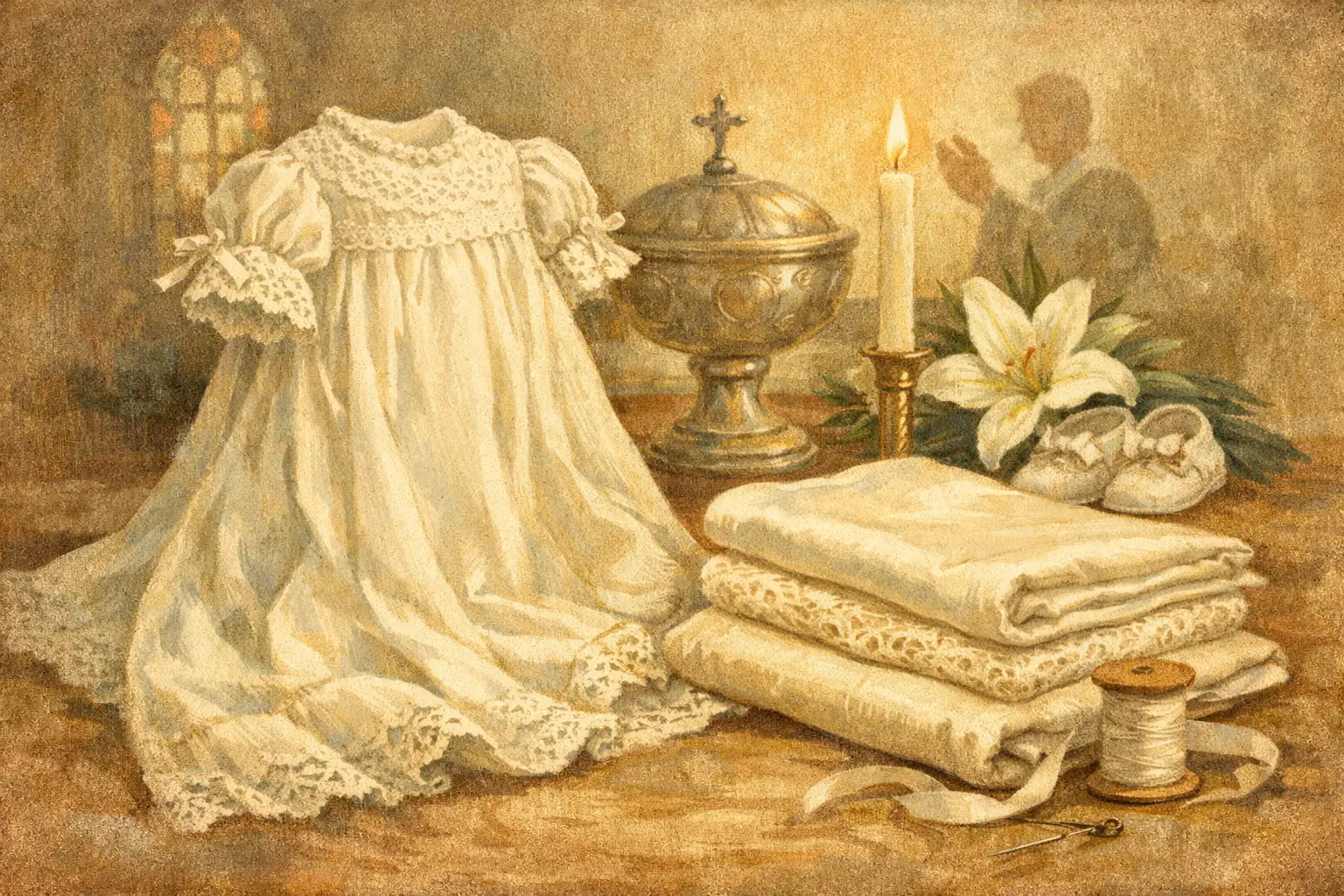
A baptism gown is more than a beautiful piece of clothing. It is held in family photos, carried into church, and often tucked away afterward as a keepsake of a child’s first sacred milestone. This baptism gown fabric guide is designed to help you choose a material that feels as lovely as it looks - one that honors tradition while keeping your little one comfortable throughout that special day.
Fabric affects nearly every part of the experience: how a gown drapes, how it photographs, whether it feels warm or airy, and how easily it can be saved for future generations. The right choice depends on the season, the ceremony setting, your baby’s age, and the kind of heirloom feeling your family hopes to create.
Why Fabric Matters in a Baptism Gown
White has long represented purity, new life, and faith in baptism attire, but the fabric gives that symbolic color its character. A crisp cotton gown has a different presence than flowing chiffon. Lustrous satin catches the light differently than matte linen, while lace can bring delicate detail without changing the gown’s classic silhouette.
Comfort deserves equal consideration. Baptisms may include travel, a church service, photographs, family visits, and a celebration afterward. Babies and young children are happiest in fabrics that feel gentle against the skin and allow them to move freely. For infants especially, a beautiful outer fabric paired with a soft lining can make all the difference.
There is also the practical side. Some fabrics resist wrinkles better, some are easier to clean, and some are best reserved for a carefully planned ceremony and professional preservation. There is no single perfect fabric for every family. The most meaningful choice is the one that suits your child, your setting, and the tradition you are celebrating.
Baptism Gown Fabric Guide: The Most Popular Choices
Cotton: Soft, Breathable, and Timeless
Cotton is a beloved choice for baptism gowns because it is naturally soft, breathable, and easy for babies to wear. It works especially well for spring and summer christenings, warm churches, and daytime celebrations. A finely woven cotton gown can look beautifully traditional, particularly when finished with pintucks, embroidery, lace trim, or a matching bonnet.
Families often appreciate cotton because it is more forgiving than delicate formal fabrics. It is usually easier to launder, though care instructions should always be followed, especially when the gown includes hand-sewn embellishment. Cotton may wrinkle more readily than satin or polyester blends, so it is wise to dress your child close to ceremony time and transport the gown with care.
Linen: Natural Elegance for Warm Weather
Linen has a refined, airy quality that feels especially fitting for a summer baptism or an outdoor family gathering. Its texture is understated rather than shiny, giving a gown a graceful, heirloom-inspired appearance. Linen is often chosen by families who love classic styling with a slightly more natural, relaxed finish.
Like cotton, linen breathes well, but it wrinkles easily. Those soft creases can be part of linen’s charm, yet they may not suit every family’s vision for formal portraits. Choose linen when comfort in warm weather and quiet elegance matter more than a perfectly smooth, high-shine look.
Satin: Formal Shine and Beautiful Drape
Satin creates the luminous, ceremonial look many families picture when they think of a traditional christening gown. It drapes smoothly, reflects light beautifully in photographs, and gives even a simple design a polished finish. Satin is a lovely choice for formal church ceremonies, cooler seasons, and gowns intended to make a memorable heirloom statement.
The trade-off is that satin is not as breathable as natural fibers, particularly when layered or lined. Look for a soft lining beneath it, and consider the temperature of the church and celebration venue. For a winter baptism, that extra substance can feel just right. For a warm afternoon event, a lighter fabric or shorter outfit may be more comfortable for an active child.
Silk: A Precious Heirloom Material
Silk is cherished for its natural sheen, softness, and exceptional drape. A silk baptism gown feels special from the first touch and carries a sense of lasting family tradition. It can be smooth and luminous like satin or softly textured, depending on the weave.
Because silk is delicate and typically requires more attentive care, it is best for families comfortable with a little extra preparation. It should be protected from spills, moisture, and prolonged direct sunlight, then properly cleaned and stored after the ceremony. When the goal is a gown to treasure, perhaps even to pass down, silk can be a truly beautiful choice.
Chiffon and Tulle: Light, Airy Layers
Chiffon and tulle are often used as overlays, skirts, sleeves, or decorative layers rather than the only fabric in a baptism gown. Chiffon is soft and flowing, creating a gentle movement that photographs beautifully. Tulle offers more shape and a touch of storybook fullness, especially on dresses for older babies and young girls.
These fabrics bring romance and dimension, but they should be balanced with comfort. Tulle can feel scratchy if it touches bare skin, so a smooth underlayer is essential. Chiffon is light and graceful, though it may snag more easily than cotton. Both are lovely details for a dressy celebration when thoughtfully lined and finished.
Lace: Detail That Connects Past and Present
Lace is often the fabric families remember most. From delicate floral motifs to classic scalloped edges, it brings a sense of craftsmanship and ceremony to baptism attire. Lace may cover the whole gown, appear at the hem and sleeves, or be layered over satin, cotton, or silk for texture and contrast.
Not all lace feels the same. Some varieties are soft and flexible, while others are structured or more textured. When choosing lace for a baby, pay attention to the fabric beneath it and the placement around the neckline, arms, and waist. A carefully made lace gown can feel wonderfully refined without sacrificing the gentleness a young child needs.
Match the Fabric to the Season and Setting
A gown should feel appropriate not only for the photographs but also for the day itself. For a summer baptism, breathable cotton, linen, lightweight silk, or chiffon details can help your baby stay more comfortable. A sleeveless or short-sleeved dress with a light blanket for the church is often more practical than a heavily layered style.
For fall and winter ceremonies, satin, silk blends, lined lace, and fuller gowns offer warmth and formality. A coordinating blanket, soft booties, or a cardigan can complete the look without hiding the gown’s meaningful details. If the church tends to be warm year-round, trust the indoor temperature over the calendar.
Consider the ceremony location, too. A grand formal church may call for satin, lace, or silk’s traditional presence. A small chapel or home baptism may feel perfectly suited to cotton, linen, or a simple embroidered gown. Both choices can be elegant. The fabric simply helps set the mood.
Look Beyond the Outer Fabric
The fabric shown first is not always the fabric that will touch your child’s skin. Before choosing, look at the gown’s lining, seams, closures, and layers. A satin gown with a breathable cotton lining may be much more comfortable than it appears at first glance. Likewise, a beautiful lace overlay is best when it is finished smoothly at the neckline and sleeves.
For babies, avoid overly stiff waistbands, rough appliqués near the skin, and closures that may press uncomfortably when they are held or seated. Easy back or bottom closures can also make a practical difference during a busy day. A christening outfit should feel special, but it should still allow room for cuddles, feeding, and all the small moments in between.
Choosing a Fabric for an Heirloom Gown
If you hope to preserve the gown for a future sibling or another generation, favor timeless materials and classic construction over passing trends. Cotton, linen, silk, satin, and well-made lace can all become cherished heirlooms when cared for properly. The key is choosing quality fabric that feels durable enough for its purpose and delicate enough to feel worthy of the occasion.
After the baptism, have the gown cleaned according to its care label as soon as possible if it has been soiled. Store it only when completely dry, away from direct light, moisture, and plastic containers that can trap humidity. Acid-free tissue and a breathable preservation box are thoughtful choices for a garment with family history in its future.
At Burbvus Christening, the loveliest baptism looks begin with details that feel right for your family: soft fabrics, thoughtful craftsmanship, and a style your child can wear with ease. Choose the material that lets you focus less on the gown during the ceremony and more on the blessing, the loved ones gathered close, and the memory you are creating together.
Share:
Top Christening Accessories for Beautiful Photos
How to Layer Christening Outfits Beautifully