
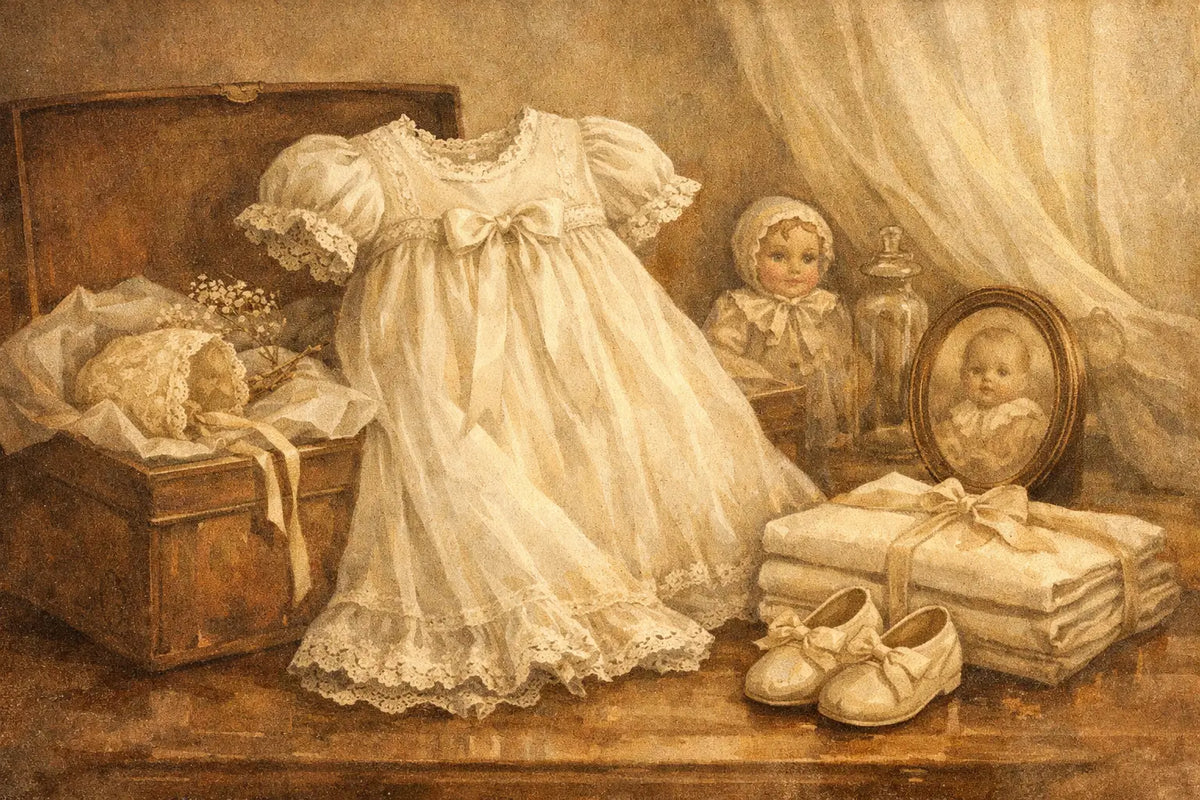
A christening gown holds more than delicate fabric and tiny buttons. It carries the memory of a baby being welcomed into faith, surrounded by parents, godparents, and loved ones. If you are wondering how to preserve a christening gown after that special day, the goal is simple: remove anything that could cause damage, store it in the right materials, and protect it from heat, light, and moisture.
A beautifully made gown can become a treasured family heirloom, whether you hope to pass it to a sibling, save it for a future generation, or simply keep it as a reminder of a sacred celebration. A little thoughtful care now helps its white fabric, handmade details, and ceremonial beauty remain lovely for years to come.
Start With Gentle Cleaning After the Ceremony
Before putting a christening gown away, inspect it carefully in good natural light. Milk, formula, cake frosting, oil from skin, and even clear spills can leave stains that darken over time. You may not see every mark immediately, but untreated residue can become difficult to remove after months or years in storage.
Check the care label first. Cotton, linen, silk, satin, tulle, lace, and embellished fabrics all respond differently to water, detergent, and heat. If the gown is machine washable, use the gentlest setting available with cool water and a mild detergent made for delicate garments. Place the gown in a mesh laundry bag if it has lace, embroidery, or small decorative details that could catch.
Handwashing is often the kinder choice for a handmade gown or one with intricate trim. Fill a clean basin with cool water, add a small amount of gentle detergent, and softly move the fabric through the water. Do not rub, twist, wring, or scrub the gown. These actions can weaken fibers, stretch lace, or loosen appliqués and buttons.
For silk, antique fabric, hand-beading, or a gown with a stain you are unsure how to treat, professional help is usually worth it. Choose a cleaner or textile preservation specialist who understands heirloom garments. Standard dry-cleaning methods may not be suitable for every delicate christening outfit, particularly if it has fragile embellishments or older fabric.
Avoid chlorine bleach, even when the gown is white. Bleach can cause yellowing, weaken fibers, and leave delicate lace brittle. If you use a stain treatment, test it first on a hidden area and follow the fabric-care instructions closely. When in doubt, preserve the fabric rather than chasing a faint mark with a harsh product.
Dry the Gown Completely Before Storage
Moisture is one of the greatest threats to an heirloom garment. Even a gown that feels nearly dry can develop mildew or musty odors when folded away. After washing, reshape the garment gently and lay it flat on a clean white towel to dry. A second towel can be placed on top and lightly pressed to absorb excess water.
Do not hang a wet gown by its shoulders, especially if it is made of heavier satin or lined fabric. The weight of the damp material can pull the gown out of shape. Keep it away from direct sunlight, radiators, heating vents, and high heat from a dryer. Heat can shrink fabric, fade trim, and make certain fibers more fragile.
Once dry, check the gown one more time. Make sure the lining, sleeves, ruffles, and folds are fully dry before moving on. This small pause protects the hours, care, and loving detail that went into the garment.
How to Preserve a Christening Gown in Archival Storage
A clean cardboard box, plastic tote, or garment bag may seem convenient, but these everyday materials are not the best long-term home for a precious gown. Cardboard can contain acids that contribute to yellowing. Plastic can trap humidity and limit airflow, creating conditions that invite discoloration or mildew.
For long-term preservation, choose an acid-free, lignin-free archival storage box. Use acid-free tissue paper between layers of fabric and inside sleeves, bodices, and folds. The tissue helps prevent sharp creases, reduces fabric-to-fabric friction, and supports the gown’s shape without adding stress.
Fold the gown as loosely as possible. If it has a full skirt, avoid pressing it into a tight, compact square. Place tissue between areas of lace, embroidery, satin ribbons, and decorative overlays so they do not transfer texture or color onto one another. Cover metal buttons, pins, or clasps with a small layer of tissue as well, since metal can tarnish or leave marks over time.
If your gown includes a bonnet, socks, shoes, or a matching blanket, store each piece separately within the same archival box when space allows. Wrap accessories in acid-free tissue so buckles, embroidery, or shoe soles do not rest directly against the gown. A baptism candle, medal, or rosary should never be stored in the box with fabric because wax, metal, and oils can cause damage.
Choose the Right Place for an Heirloom Gown
Where you keep the box matters just as much as what is inside it. The best storage spot is cool, dry, dark, and stable throughout the year. A shelf in an interior closet is often a much better choice than an attic, basement, garage, or storage unit.
Attics can become extremely hot, while basements may be damp and prone to flooding. Garages often experience both temperature swings and dust. These changing conditions can encourage yellowing, mildew, brittle fibers, and insect damage.
Keep the archival box away from exterior walls, pipes, and heating vents. It should sit on a clean shelf rather than directly on the floor. If your home tends to be humid, a dehumidifier in the surrounding area may help, but do not place moisture-absorbing products directly inside the storage box unless they are specifically designed for archival textile storage.
Avoid Common Preservation Mistakes
Many well-meaning families unintentionally shorten the life of a christening gown by using materials that seem protective. The following choices are best avoided for long-term storage:
- Plastic dry-cleaning bags, zipper bags, and airtight bins that can trap moisture.
- Colored tissue paper, newspaper, wrapping paper, or ordinary cardboard that may transfer acids or dyes.
- Wire hangers, which can distort the shoulders and snag delicate fabric.
- Cedar chests or mothballs placed near the gown, since strong oils and chemicals can leave odors or stains.
- Vacuum-sealed bags, which create hard creases and place pressure on lace, embroidery, and fragile fibers.
Check the Gown From Time to Time
An heirloom gown should not be packed away and forgotten forever. About once a year, bring the box into a clean, dry room and inspect the garment with freshly washed, dry hands. Look for signs of yellowing, discoloration, insects, moisture, or new creases.
Refold the gown along different lines, replacing tissue paper if it has become crushed or discolored. This helps prevent permanent fold marks. Keep food, drinks, lotions, and scented candles away during inspection. If you notice a stain or a concerning change in the fabric, seek professional advice early rather than trying a strong home remedy.
This is also a lovely opportunity to preserve the story behind the gown. Place a small acid-free note in the box with the child’s name, baptism date, church, and the names of parents and godparents. You might include a printed photograph from the ceremony as well, provided it is kept in a separate archival sleeve. Years from now, these details can be as meaningful as the gown itself.
A christening gown is a beautiful expression of faith, family, and the hopes held for a child’s future. When you care for it with the same tenderness that surrounded the baptism day, it can remain ready for the next little one who wears it and becomes part of its story.
Share:
Christening Gown vs Romper: Which Is Right?
12 Best Christening Jewelry Gifts for Baby