
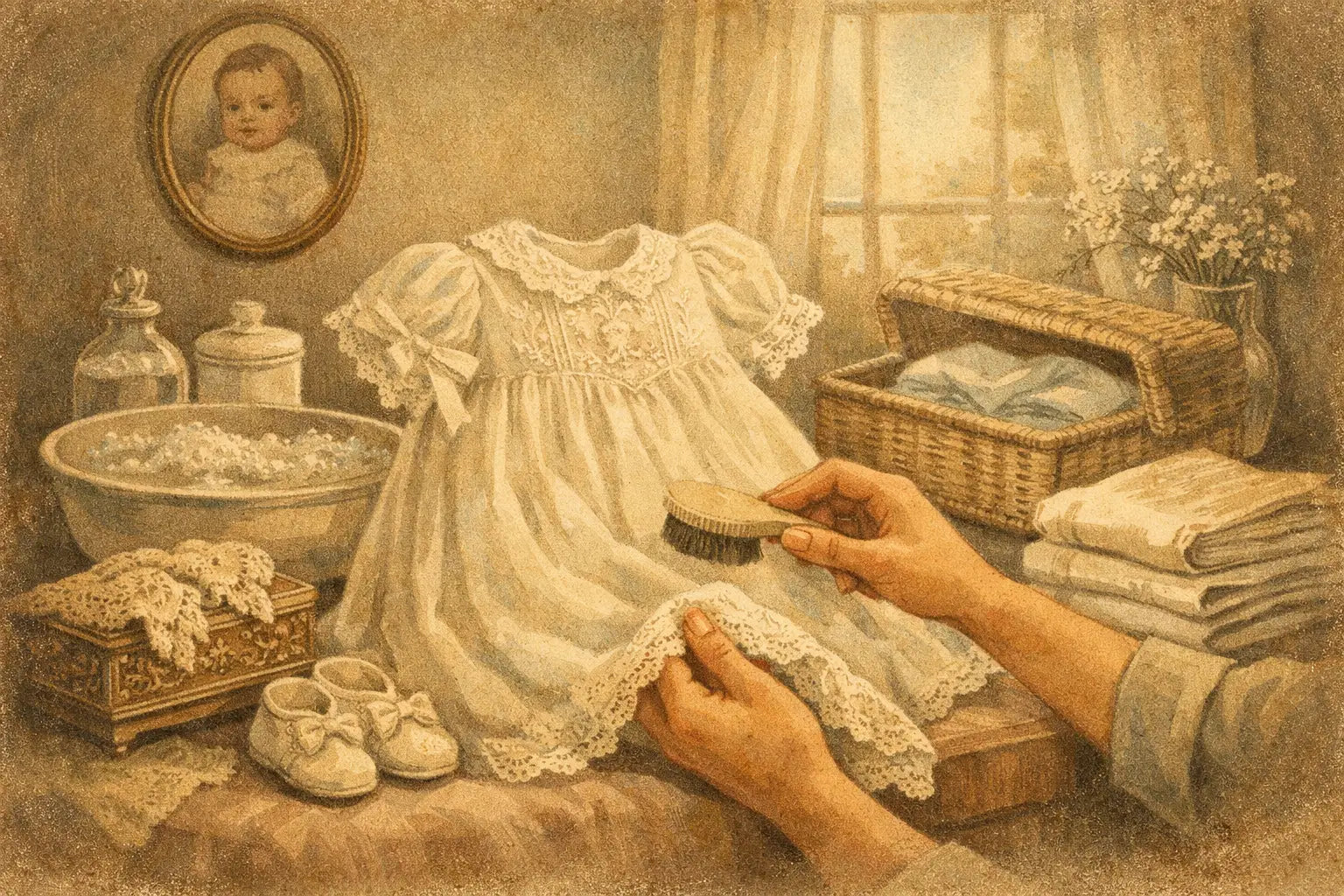
A christening gown often carries more than lace, silk, or hand embroidery. It carries the memory of that special day, the love of parents and godparents, and in many families, the quiet beauty of tradition passed from one child to the next. That is why heirloom christening gown care matters so much. A little attention before and after the ceremony can protect a treasured garment for years, and sometimes for generations.
The good news is that caring for an heirloom gown does not have to feel intimidating. The key is knowing what the fabric can handle, what should be left to a professional, and how to store the gown so time works in your favor rather than against it.
Why heirloom christening gown care starts before the ceremony
Many families think about preservation after the baptism, but the best care begins before the gown is even worn. If you are dressing your baby in a vintage gown or a handmade piece with delicate trims, check it carefully a few days before the event rather than the morning of the ceremony.
Look for yellowing, loose buttons, weak seams, and fragile lace. A gown that appears beautiful at first glance may have small areas where age has weakened the fibers. This matters especially with silk, older cotton, fine netting, and hand-finished details. If you notice splitting fabric or brittle trim, it is wiser to stabilize the garment than to risk damage during dressing.
It also helps to think practically about the ceremony itself. Babies can spit up, drool, or have a diaper leak at the worst possible moment. For that reason, many parents place a soft absorbent cloth between the baby and the gown while waiting, then remove it just before photos or the service. That simple step can reduce the chance of deep staining without changing the look of the outfit.
Know the fabric before you clean anything
One of the biggest mistakes in heirloom christening gown care is treating every white gown the same way. A crisp cotton gown, a silk heirloom dress, and a piece trimmed in antique lace do not respond to cleaning in the same way.
Cotton and linen are usually the most forgiving, though they can still shrink or lose shape if washed too aggressively. Silk is much more delicate and can water spot, weaken, or discolor with the wrong cleaner. Older lace may look sturdy but can break when wet if the fibers have become fragile over time. Satin, especially if blended with synthetic fibers, may respond differently than natural fabrics and can show marks if rubbed too hard.
If the gown has no care label, do not guess. Test only the gentlest methods first, and when the garment is old, handmade, or visibly delicate, a textile or christening-garment specialist is often the safer choice. This is one of those times when caution protects both beauty and meaning.
How to handle fresh stains after the baptism
The sooner a stain is addressed, the better the result is likely to be. Still, speed should never lead to harsh treatment. If milk, formula, or spit-up gets on the gown, blot gently with a clean white cloth. Do not scrub. Rubbing can push the stain deeper and rough up the fibers.
For a small fresh spot on a washable cotton gown, a little cool water may be enough to lift the residue. Avoid hot water, which can set protein-based stains. If there is an oily mark or a more stubborn spot, use only a very mild cleanser tested on an inconspicuous area first.
If the gown is silk, vintage, or embellished with handwork, resist the urge to experiment with home stain removers. Bleach, brightening pens, and strong detergents can do permanent harm. A faint stain is often preferable to damaged fabric.
Washing an heirloom gown at home - when it is appropriate
Some gowns can be hand-washed at home, but this depends on both fabric and condition. A newer heirloom-style gown made from sturdy cotton or a cotton blend may handle gentle hand washing well. An older family gown with age, fragile seams, or unknown fiber content may not.
If home washing is appropriate, fill a clean basin with cool water and add a small amount of gentle detergent meant for delicate fabrics. Submerge the gown briefly and move the water softly with your hand. Do not twist, wring, or stretch the garment. Let the water do the work.
Rinse thoroughly in cool water until no soap remains. Leftover detergent can cause yellowing over time, which is one reason some gowns look dull after years in storage. When rinsing is complete, support the gown fully as you lift it out. Wet fabric is heavier and more vulnerable to stress.
Lay the gown flat on a clean white towel, then roll the towel gently to remove excess moisture. After that, reshape the gown and dry it flat or on a padded hanger if the fabric is stable enough. Keep it away from direct sunlight, heating vents, and any source of high heat.
When professional cleaning is the better choice
There are moments when professional care is worth every bit of caution. If the gown is antique, heavily embellished, made of silk, or stained with something old and set in, a professional with experience in christening garments or vintage textiles is usually the wisest option.
Not every dry cleaner is equipped for this kind of work, so it helps to ask specific questions. Have they cleaned baptism gowns before? Do they handle hand embroidery, lace, silk, or beadwork? Will they inspect for weak areas before treatment? A cleaner who understands ceremonial garments will often be more conservative, and that is exactly what you want.
This is especially true for gowns meant to remain in the family. Preservation is not just about making the dress look clean for one more event. It is about protecting the structure, color, and detail so the next child can wear it with the same grace.
Heirloom christening gown care for storage
Once the gown is fully clean and completely dry, storage becomes the next important step. Moisture trapped in fabric can lead to mildew, and even a small unseen stain can darken with age. A gown should never be stored until you are confident it is both clean and dry.
Choose acid-free tissue and an archival storage box if possible. Regular cardboard boxes and colored tissue can transfer acids that cause yellowing and fabric breakdown over time. Plastic garment bags are also risky for long-term storage because they can trap humidity.
Gently pad sleeves, folds, and bodice areas with acid-free tissue so hard creases do not set deeply into the fabric. Fold as little as possible, and if the gown is especially long, refold it in a different position every year or two to prevent permanent stress lines.
Store the box in a cool, dark, dry part of the home. Avoid attics, garages, and basements where heat, cold, or humidity can fluctuate. A bedroom closet on an interior wall is usually a safer choice than a space exposed to temperature swings.
Protecting delicate details over time
The beauty of a christening gown often lives in the details - scalloped lace, pintucks, tiny buttons, satin ribbons, hand smocking, or embroidery stitched with care. These details can age differently than the base fabric, so they deserve extra attention.
Buttons and hooks should be fastened loosely or padded so they do not press into the fabric. Ribbons should be laid flat rather than tied tightly for storage. If the gown has metal accents or pins, remove them before storing to reduce the chance of rust or transfer.
It is also smart to inspect the gown once or twice a year. You are not handling it often, just checking for signs of yellowing, insects, moisture, or strain at fold lines. Quiet upkeep is part of good heirloom care. It keeps small issues from becoming heartbreaking ones.
If you want the gown worn again
A family heirloom is meant to be loved, not hidden away in fear. If you hope another baby will wear the gown, think of care as preparation for joy rather than simply preservation. Before the next christening, take the gown out early, let it breathe in a clean room, and inspect it in natural light.
If gentle pressing is needed, use the lowest suitable setting and place a clean pressing cloth between the iron and the garment. Steam can help in some cases, but delicate fabrics do not all respond well, so it depends on the material. When there is any doubt, professional pressing is the safer route.
Families who want a beautiful balance of tradition and practicality sometimes choose to preserve a very fragile original gown while selecting a new handcrafted piece inspired by the same style. That can be a thoughtful option when the emotional value of the heirloom is high but the fabric can no longer withstand wear. Burbvus Christening understands that balance well because these garments are never just outfits. They are part of a sacred family memory.
A christening gown can last beautifully when it is treated with patience, gentleness, and respect for what it represents. Care for it as you would any meaningful family treasure, and it can be ready, years from now, for another baby, another blessing, and another day filled with grace.
Share:
Church Baptism Dress Code for Families
Christening Candle Guide for Parents