
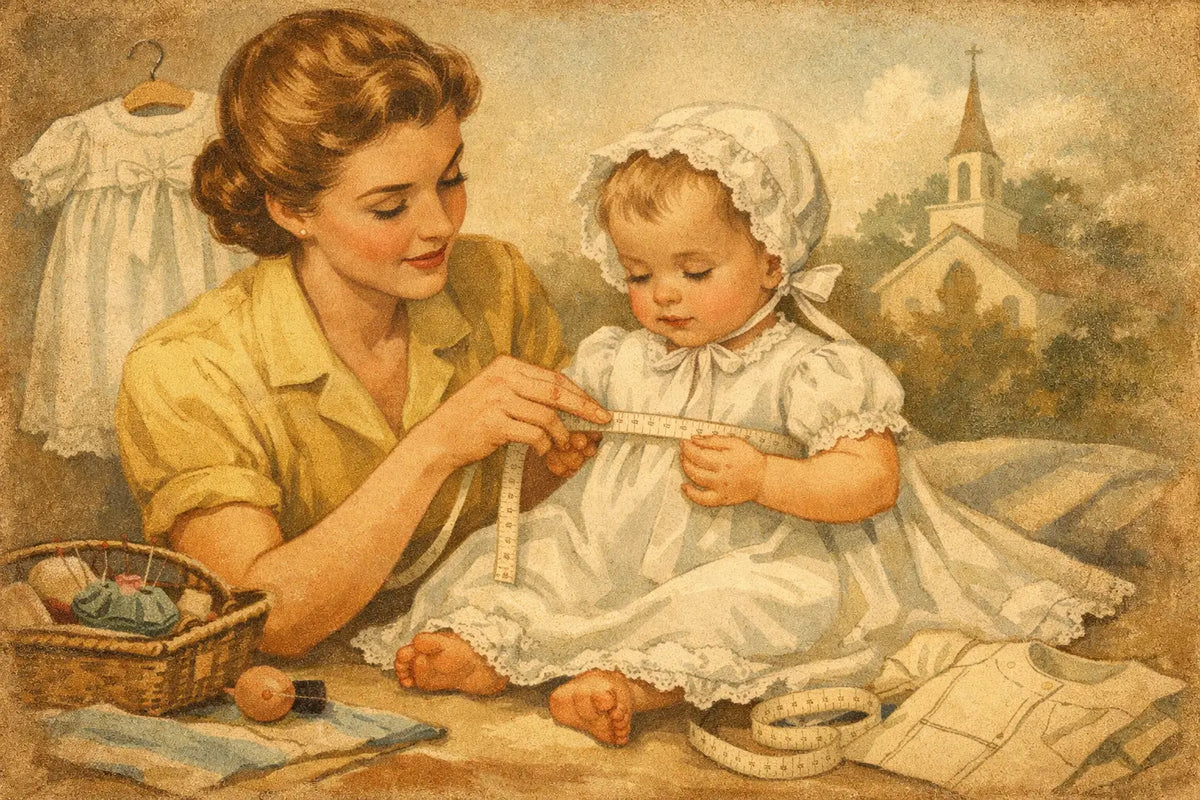
A baptism gown may be worn for only a few precious hours, yet it will appear in the photographs, be held close during the blessing, and often become part of a family’s keepsake tradition. Knowing how to measure baptism gown sizing correctly helps you choose a piece that feels comfortable for your child and looks beautifully proportioned for that special day.
A gown that is slightly roomy is usually preferable to one that feels restrictive. Still, a gown that is far too long or wide can overwhelm a small baby, make holding them less comfortable, and hide the lovely handcrafted details you chose. The goal is not a tight, everyday-clothes fit. It is a graceful ceremonial fit with enough space for movement, layers, and a diaper.
Before You Measure Your Child
Use a soft, flexible measuring tape, such as a sewing tape. If you do not have one, wrap a piece of ribbon or string around the area you need to measure, mark the point where it meets, then lay it flat against a ruler. Measure in inches for the most useful comparison with US size charts.
Dress your baby or child in the underlayer they are likely to wear for the ceremony. For an infant, that may mean a diaper and a lightweight bodysuit. For an older child, it may include a slip, undershirt, tights, or bloomers. Measuring over those layers gives a more realistic result than measuring over bare skin.
Choose a calm moment. A sleeping infant can be easier to measure with a parent’s help, while a standing toddler may cooperate best after a snack or favorite activity. You do not need absolute perfection down to a fraction of an inch. A careful, relaxed measurement is more valuable than trying to pull the tape too tightly while your little one wiggles.
How to Measure a Baptism Gown Step by Step
Every baptism gown has its own cut. A traditional heirloom-style gown may be long, flowing, and designed to fall well below the feet, while a baptism dress for a walking child may end nearer the ankle or calf. Compare your child’s measurements with the size chart provided for the specific gown whenever possible.
Measure the chest
For chest size, place the tape around the fullest part of your child’s chest, just beneath the arms. Keep the tape level around the back and comfortably loose. You should be able to slide a finger beneath it without difficulty.
This is often the most helpful measurement for choosing the correct size because the chest determines whether the gown can be put on easily and whether your child will have room to breathe, be carried, and move their arms. If your child falls between sizes, choosing the larger size is generally the kinder choice for a ceremonial garment, especially for babies in diapers.
When reading a gown chart, check whether it lists the child’s body chest measurement or the finished garment chest measurement. A finished gown should be larger than your child’s actual chest to allow for comfort and ease. If the listing does not make that clear, measure a special-occasion outfit that already fits your child comfortably and compare its chest width with the garment details.
Measure the gown length
Length is what gives a baptism gown its timeless, formal appearance. For a baby gown, measure from the center base of the neck down the front of the body to the point where you would like the hem to fall. Many traditional christening gowns are deliberately long, extending beyond the baby’s feet when they are held. This creates a lovely drape and honors the classic look many families cherish.
For a child who will stand or walk during the celebration, measure from the shoulder, close to the neck, down to the desired hemline. An ankle-length gown is often an elegant choice for toddlers and young children because it preserves the formal silhouette without creating as much of a tripping concern.
Do not assume that a longer gown is automatically too large. A long skirt may be part of the intended design, particularly for infants. Instead, consider where your child will be during the ceremony. A baby held in a parent’s arms can wear a fuller, longer gown beautifully. A confident walker may need a shorter hem or a dress-style baptism outfit that allows safer movement.
Measure the shoulders and sleeves when needed
Not every gown requires a shoulder measurement, especially styles with soft gathered necklines or generous cap sleeves. However, it is worth measuring when selecting a more tailored baptism dress, a boy’s formal outfit, or a gown with structured sleeves.
Measure across the back from one shoulder point to the other. For sleeve length, start at the shoulder seam area and measure down to the wrist or the point where you would like the sleeve to end. Keep your child’s arm slightly bent if possible. A sleeve that seems perfect with the arm straight can feel short once a baby reaches up or a toddler raises their hands.
For puff sleeves and bishop sleeves, focus less on a precise arm fit and more on whether the chest and shoulder area leave enough room for natural movement. The softness and fullness are part of their charm.
Consider waist, hips, and diaper room
A loose, traditional gown rarely needs a separate hip measurement. A baptism dress with a defined waistband, sash, or fitted bodice may be different. Measure around the natural waist, usually the narrowest point of the torso, without pulling the tape snug.
For babies, diaper room matters more than a neat waistline. A gown should sit easily over a fresh diaper without pulling across the front or riding up when your baby is held. If you are choosing between sizes, a little extra room through the body is usually much more comfortable than a close fit.
Use Age and Weight as Helpful Clues, Not the Final Answer
Age-based sizing can be a useful starting point, but babies and children grow at wonderfully different rates. One six-month-old may fit beautifully into a 3-6 month gown, while another needs 6-12 month sizing because of a longer torso, broader chest, or room for a cloth diaper.
Weight can offer another useful reference, particularly for infants, but it cannot tell you everything about length or proportions. A petite baby may have a long body, and a sturdier baby may need a roomier chest without needing extra skirt length. Actual measurements give you the clearest path to a confident choice.
If the baptism is still several weeks away, allow for growth. This is especially wise during the first year, when even a short wait can make a noticeable difference. Avoid sizing up so dramatically that the neckline slips or sleeves fall over the hands, but do not choose a gown that fits only at this exact moment if the ceremony is a month away.
Check the Details That Affect Fit
Fabric and construction can change how a gown feels. Cotton and linen may have a more tailored feel, while tulle overlays and flowing chiffon can create extra visual volume without adding tightness. Fully lined gowns can feel more substantial, which is lovely for a formal church setting but may call for lighter layers underneath in warmer weather.
Look closely at the neckline and closure style. Back buttons, zipper closures, and tie backs can make dressing easier or create a more adjustable fit. A gently elasticized waist or a tie sash may offer welcome flexibility, while a high-waist empire silhouette is often especially comfortable for infants.
Also think about the accessories that complete the look. Soft booties, socks, a coordinating blanket, and a baptism candle set can make the day feel thoughtfully prepared, but the gown should remain the foundation. If shoes will be worn, make sure a long hem still allows them to show in the photographs if that matters to you.
What to Do When Your Child Is Between Sizes
When measurements land between two sizes, the right decision depends on the gown’s style and the ceremony date. For a structured, fitted bodice, choose the size that accommodates the chest and waist comfortably. For a flowing heirloom gown, extra length and room can be charming, particularly for a baby who will be carried.
If your child has a larger chest or wears a cloth diaper, prioritize the larger size. If they are petite but tall, compare the garment length carefully rather than relying on age alone. And if the gown is meant to be preserved as an heirloom, a slightly generous fit can feel more traditional and allows the fabric to fall naturally.
At Burbvus Christening, each baptism outfit is chosen with the beauty of family tradition and the practical needs of little ones in mind. Reviewing the individual product measurements before ordering gives you the best confidence that the details, fit, and ceremonial style will come together gracefully.
A Final Fit Check Before the Ceremony
Try the complete outfit on a few days before the baptism, not only the morning of the service. Check that the neckline rests comfortably, the sleeves allow easy arm movement, and the hem falls as expected when your child is held, seated, or standing. Keep the gown away from snacks and playtime, of course, but let your child wear it long enough to reveal any discomfort.
This small moment of preparation leaves more room for what truly matters on baptism day: the loving arms around your child, the meaning of the blessing, and a beautiful garment that becomes part of the memory for years to come.
Share:
How to Style Sibling Baptism Outfits With Grace
Christening Bonnet Styles for a Beautiful Day