
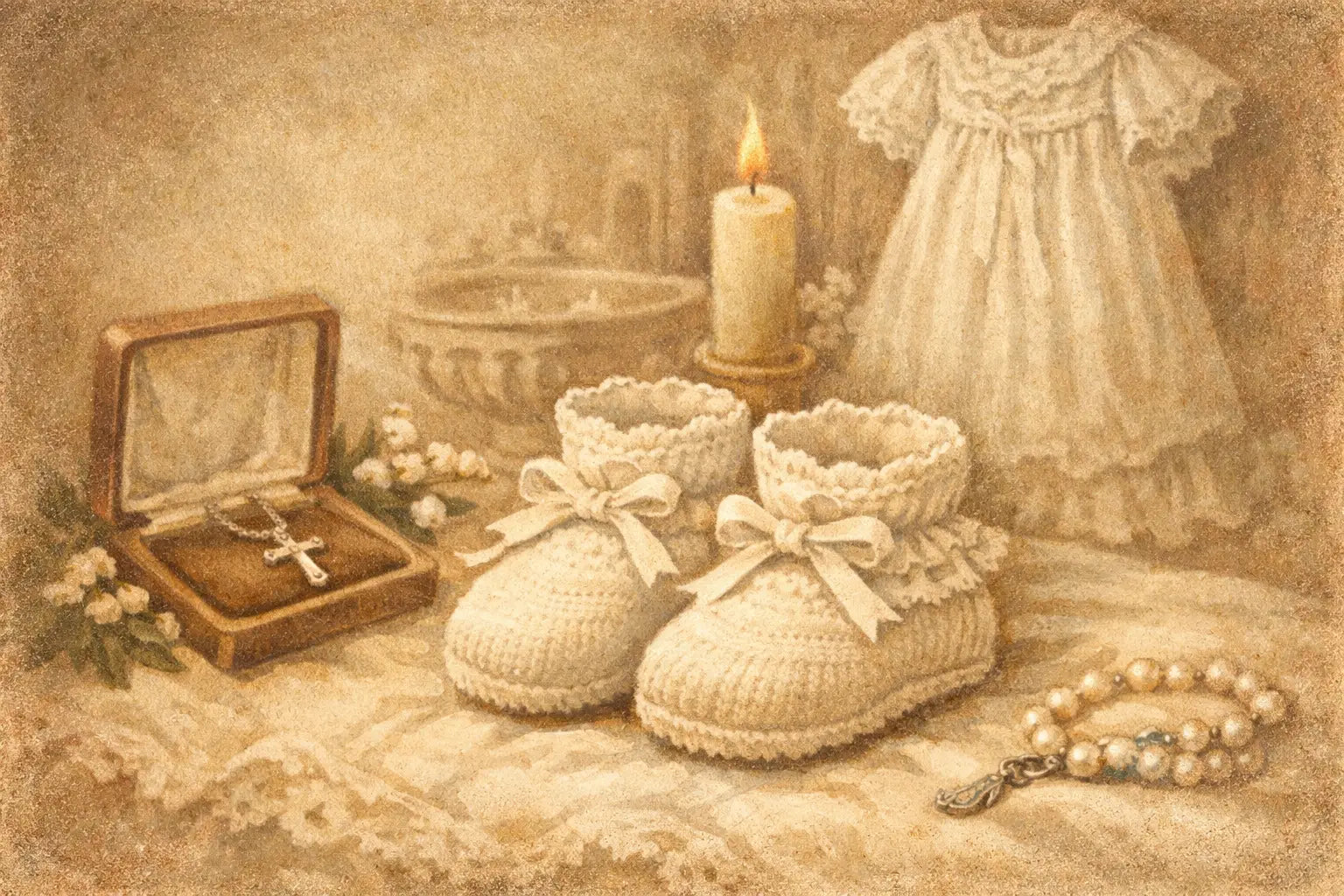
A christening outfit may begin with a gown, romper, or dress, but the tiny finishing details are often what make the whole look feel complete. Learning how to choose baby booties means balancing the beauty of a cherished family occasion with what your little one will actually be comfortable wearing through the ceremony, photographs, and celebration afterward. The loveliest pair should feel soft, stay on securely, and belong naturally with the significance of the day.
How to Choose Baby Booties for a Christening
For a baptism or christening, baby booties are more than a practical layer. They bring a graceful, finished touch to an outfit chosen for a sacred milestone. Whether your baby will wear a traditional long gown, a tailored boy’s outfit, or a delicate christening dress, begin with the full look rather than selecting shoes in isolation.
Look at the garment’s fabric, trim, and shade of white. A bright white cotton outfit can pair beautifully with crisp white booties, while ivory lace, silk, or satin often looks more harmonious with soft ivory footwear. White and ivory are both classic choices, but they do not always match perfectly. Holding the items together in natural light is a simple way to avoid an unintended contrast in ceremony photos.
The formality of the outfit matters, too. A simple cotton knit bootie suits a relaxed family baptism or an heirloom-style gown with understated embroidery. Satin, lace, or finely detailed leather-style booties can complement a more formal ensemble. The goal is not to make the footwear compete with the gown or suit. It is to choose a beautiful detail that supports the overall feeling of tradition and care.
Start with comfort, not shoe size alone
Babies do not need structured shoes to walk during a christening, and a stiff sole can be uncomfortable for a child who is being held, resting in a car seat, or stretching during the service. Soft-soled booties are usually the most fitting choice for infants. They protect little feet from cool air and add a polished finish without restricting natural movement.
Sizing can be less predictable than parents expect, especially in the first year. A baby may have small feet for their age, or be between sizes on the day of the ceremony. Measure from heel to the tip of the longest toe, then compare that measurement to the product’s size guidance. When you are deciding between two sizes, a little growing room is preferable to a tight fit, but avoid choosing so large that the booties slip off during photos or while your baby is being carried.
Check the opening as carefully as the length. Booties should slide on without force and sit gently around the ankle. Elastic, soft ties, adjustable closures, or a flexible cuff can help them stay in place. Nothing should leave deep marks on your baby’s skin. If a pair includes ribbons, make sure they can be tied securely without dangling too long or becoming uncomfortable beneath a blanket.
Choose materials that feel gentle against delicate skin
A christening can involve a church service, family visits, photographs, and travel, so material affects more than appearance. Soft cotton, smooth satin, fine knit fabrics, and supple leather-style materials are popular for good reason: they can feel special while remaining gentle against sensitive skin.
Cotton and knit booties are breathable and especially well suited to warm weather or babies who tend to get warm when layered. They bring a sweet, timeless softness to a traditional baptism look. Satin booties offer a more formal glow and pair beautifully with gowns, dresses, and ceremonial outfits featuring satin trim. Lace details can be especially lovely when they echo lace on the garment, though a fully lace-covered style may be less practical if the event includes outdoor walking, a busy reception, or frequent handling.
For colder months, choose a slightly warmer material or pair soft booties with coordinating socks or stockings. The key is to create warmth without making the feet bulky. Heavy shoes can overpower a delicate christening outfit and may be removed by an uncomfortable baby before the photographs even begin.
Before the special day, feel inside the bootie for rough seams, stiff decorative pieces, or scratchy labels. A tiny embellishment that looks charming on a display table can irritate a baby after an hour of wear. Elegant craftsmanship should be felt as well as seen.
Let color and details complement the ceremony outfit
Traditional white and ivory booties remain the natural choice for christenings because they reflect the purity, reverence, and enduring beauty associated with baptism. Yet there is still room to make the selection personal. A bow, scalloped edge, small pearl-like accent, subtle embroidery, or cross detail can add a meaningful touch when it suits the family’s tradition.
For an elaborate gown, choose simpler booties. If the outfit is clean-lined and minimal, a pair with refined lace or a satin bow can bring a gentle focal point near the hem. This balance matters in photographs, where several ornate pieces can appear busy rather than graceful.
Consider the rest of the accessories as one thoughtful collection. A bonnet, headband, blanket, socks, candle set, or baptismal medal may all be part of the day. Repeating one detail, such as ivory satin or a small pearl accent, creates a coordinated look without making every piece identical. Families often treasure christening photographs for decades, and coordination helps the outfit feel intentional from head to toe.
Think about the season and the celebration beyond the church
A pair that feels perfect for a winter church service may not be the best choice for a warm summer baptism. In cooler weather, soft lined booties or knit styles can help keep little feet comfortable. For spring and summer, lightweight materials and breathable construction are generally kinder to a baby who is wearing several ceremonial layers.
Also think about what happens after the blessing. Will your baby spend time in a car seat? Will family members be taking turns holding them? Is there an outdoor photo moment or a restaurant gathering afterward? A bootie with a secure closure is especially helpful for a long day away from home. It is wise to bring a spare pair of simple socks or booties in the diaper bag, particularly if the ceremony outfit is light-colored and the day includes travel.
If your baby is already cruising or walking, you may need more grip than a young infant would. In that case, look for a flexible sole with gentle traction, while still keeping the profile soft and formal. A walking baby has different needs, and choosing for their stage is more useful than following a single rule for every age.
Prepare the booties before the ceremony
Do not wait until the morning of the baptism to try on the complete outfit. Dress your baby in the gown or outfit, socks if they will be worn, and booties for a short practice session. Notice whether the cuffs stay in place, whether the ties are easy to manage, and whether the proportions look right with the hemline.
This is also the time to inspect delicate details and carefully remove any tags. Keep the booties clean in a small protective bag until it is time to dress your baby. If they are fabric or satin, check the care instructions before attempting to spot-clean them. A gentle approach protects the material and preserves the pair as a keepsake after the celebration.
For many families, christening booties become a small but meaningful reminder of the day: the pair visible beneath a gown in treasured photos, tucked into a memory box, or passed along with love. Choose the pair that feels beautiful in your hands, comfortable on your baby’s feet, and worthy of the blessing your family is gathering to celebrate.
Share:
Best Baby Stockings for Christening Days
Top Christening Accessories for Beautiful Photos