
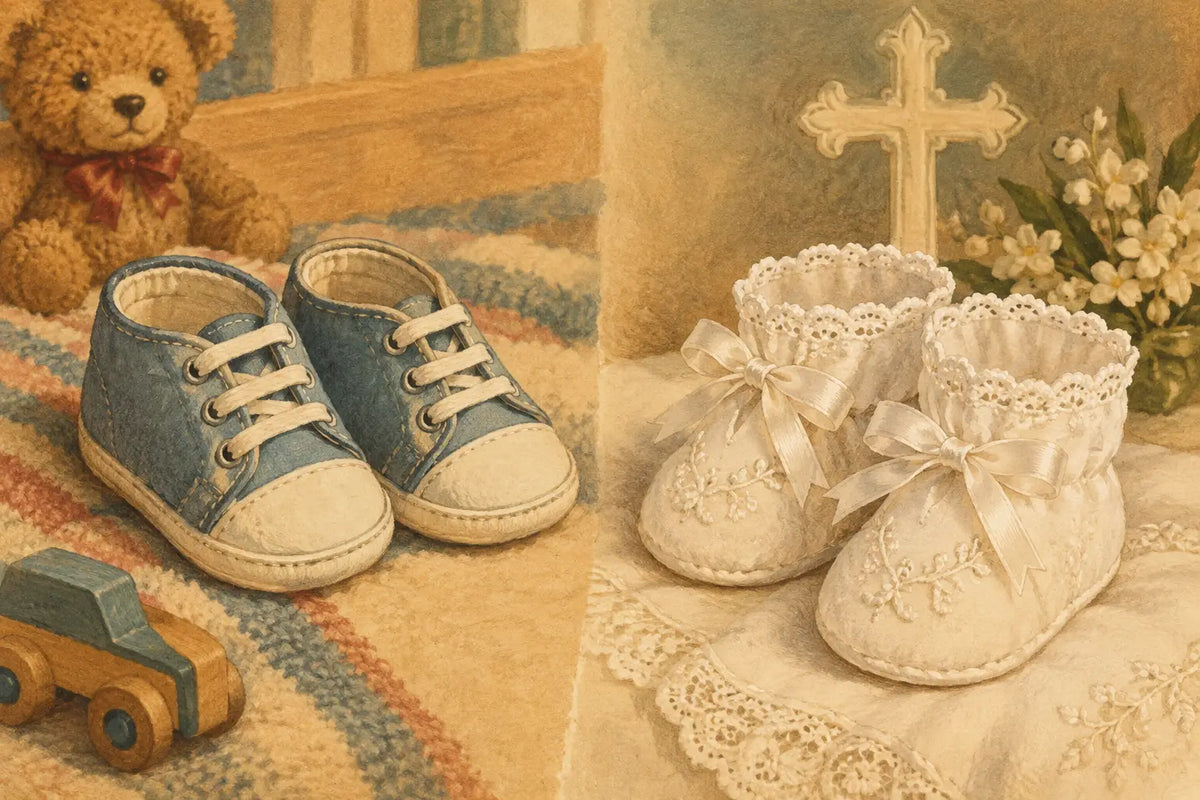
A christening outfit is often chosen piece by piece: the gown or suit, the blanket, perhaps a candle or medal, and finally the tiny finishing touch at baby’s feet. When comparing baby shoes versus christening booties, the choice is not simply about what looks sweetest in photographs. It is about honoring the tone of the ceremony while keeping your little one comfortable through a meaningful family day.
Both styles can be beautiful for baptism. The best choice depends on your baby’s age, whether they are walking, the season, and the formality of the outfit. Understanding the distinction makes it easier to choose footwear that feels fitting, polished, and worthy of a moment your family will remember for years.
Baby Shoes Versus Christening Booties: The Real Difference
Baby shoes are structured footwear made to resemble small versions of traditional dress shoes, sandals, or soft-soled shoes. They may feature a firmer sole, a defined heel shape, straps, laces, or decorative details such as satin bows and pearl-like buttons. For a baptism, white, ivory, and soft neutral shades are classic choices because they complement the purity and reverence traditionally associated with the sacrament.
Christening booties are typically softer, lighter, and more delicate. They often wrap gently around the foot and ankle in cotton, knit fabric, satin, lace, or a soft leather-like material. Some have ribbon ties or elasticized openings, while others are designed like tiny slippers. Their gentle construction makes them especially lovely for newborns and younger babies who will be held for much of the service.
Neither option is automatically more formal. A pair of handcrafted lace booties can look wonderfully ceremonial with a traditional gown, while polished white shoes may be the natural choice for an older baby wearing a tailored baptism outfit. The difference lies in their structure, purpose, and the overall feeling they bring to the look.
Choose for Your Baby’s Stage, Not Just the Outfit
For a newborn or baby who is not yet standing, christening booties are often the most comfortable choice. Little feet are still developing, and a soft pair provides warmth without unnecessary stiffness. Booties also tend to stay visually proportional to the delicate scale of a young infant, especially beneath a long christening gown.
For a baby who is pulling up, cruising, or walking, shoes may be more practical. A soft, flexible sole can offer a bit more protection while your child moves between the church, family photos, and the celebration afterward. Look for footwear that bends easily with the foot rather than a rigid pair designed primarily for appearance.
A walking baby does not need a heavily constructed formal shoe for a short ceremony, but they do benefit from a secure fit. A strap across the instep or an adjustable closure can be helpful when little feet are active. If your child is between sizes, it is usually better to choose a slightly roomier fit than a pair that presses against the toes.
A quick fit check before the big day
Try the footwear on with the socks or tights your baby will wear during the baptism. Check that there is a small amount of room at the toe, that the heel is not slipping excessively, and that no elastic, ribbon, or strap leaves a deep mark on the skin after a few minutes. A pair can look perfect in the box yet feel distracting once your baby is being carried, seated, and cuddled throughout the day.
If you are giving footwear as a gift, especially as a godparent or grandparent, ask for the baby’s current shoe size and age rather than guessing from the outfit size. Babies grow quickly, and the right fit is part of the care behind the gift.
Match the Footwear to the Baptism Outfit
The hemline of the outfit makes a real difference. Long heirloom-style christening gowns pair beautifully with soft booties because only a glimpse of the foot may show. Lace-trimmed, satin, or finely knitted booties add texture without competing with the gown’s detail.
Shorter dresses, rompers, and boys’ baptism suits show more of the footwear, so shoes can take on a stronger role in the finished look. Classic Mary Jane-style shoes are a graceful choice for a baby girl’s dress, while simple white or ivory dress shoes complement a boy’s vest set, suit, or formal romper. Clean lines tend to photograph well and allow the outfit to remain the center of attention.
Color coordination should be close, but it does not have to be identical. White shoes with an ivory gown, for example, can still look lovely if the surrounding accessories bring the tones together. The key is to avoid a noticeably yellow ivory against a bright blue-white fabric unless that contrast is intentional.
Pay attention to embellishment, too. If the gown has intricate lace, embroidery, or beading, a simpler shoe or bootie often creates balance. If the outfit is clean and understated, a small satin bow, delicate lace trim, or subtle embroidered cross can provide a beautiful finishing detail.
Consider the Church, the Weather, and the Schedule
A baptism outfit may be worn for only an hour or two, but the day itself can be longer. Families often travel to the church, gather for photographs, then continue to a meal or reception. Think beyond the ceremony when deciding between shoes and booties.
In cooler weather, closed booties offer welcome warmth for a young baby. They are also easy to tuck beneath a blanket during travel. In warmer months, breathable cotton or lightweight fabric booties can be more comfortable than heavily lined shoes. For an older child attending a summer baptism, soft shoes with a flexible sole may make moving around easier without looking casual.
Church flooring can also influence the choice. Smooth stone, wood, and tile can be slippery for early walkers. If your baby will be walking or standing for photographs, choose a pair with a gentle grip rather than a slick bottom. For a non-walking infant, softness and comfort matter more than traction.
It can be wise to bring a backup pair of clean socks or soft booties in the diaper bag. After a long drive, an unexpected spill, or a fussy moment, having an easy change can preserve both comfort and the polished look of the outfit.
Tradition Can Guide the Choice, but It Does Not Have to Limit It
Many families choose christening booties because they echo a long-standing tradition of dressing infants in soft, white ceremonial garments. They feel tender, classic, and appropriate for a child being welcomed into the faith community. A special pair can even become part of a family keepsake box, brought out again for a sibling, cousin, or the next generation.
Others prefer baby shoes because they suit an older infant or reflect a more tailored family style. There is room for both approaches in a baptism celebration. The most meaningful choice is one that respects the occasion and allows your child to be at ease.
If your family has an heirloom pair of booties, inspect the fabric and closures before the day arrives. Vintage pieces may be precious but fragile. You may decide to use them for photographs or a brief moment during the ceremony, then change into a newer pair for comfort and security. That honors the family tradition without placing too much wear on a delicate keepsake.
How to Create a Coordinated Baptism Look
Footwear is a small detail, yet it can quietly pull the entire baptism ensemble together. Consider the fabric and finish of the gown or suit first, then choose shoes or booties that repeat one element: the soft sheen of satin, the airy texture of lace, the warmth of knit fabric, or the clean simplicity of cotton.
For parents planning the full look, laying every piece out together before the baptism can bring welcome peace of mind. Place the gown or outfit beside the blanket, socks, footwear, and any hair accessory or jewelry. This makes it easier to spot a mismatch in tone, scale, or formality before the morning of the service.
Burbvus Christening collections are designed with this kind of thoughtful coordination in mind, helping families pair ceremonial apparel and accessories without losing the individual details that make the occasion feel personal.
The right pair does not need to be elaborate to be memorable. Whether you choose soft christening booties for a sleeping newborn or refined baby shoes for a confident little walker, choose the pair that lets your child be comfortable, cherished, and beautifully dressed as your family celebrates that special day.
Share:
Godmother Christening Attire Guide for a Graceful Look
Baptism Gown Versus Suit: Which Is Right?