
Water is poured, oil is traced gently on the skin, a white garment is received, and a candle is lit. Each action in a Catholic baptism is simple to see, yet carries a meaning that reaches far beyond the moment. Understanding these Catholic baptism symbols helps parents and godparents participate with greater confidence and recognize the spiritual promise expressed throughout the rite.
Together, water, sacred oil, the white garment, and the baptism candle tell one connected story: new life in Christ, the gift of the Holy Spirit, belonging to the Church, and a lifelong call to walk in faith. Exact practices may vary by parish, so always follow your church’s instructions.
Why Catholic Baptism Uses Visible Signs
Catholic worship uses familiar elements that people can see and touch. Water washes, oil strengthens and consecrates, clothing marks a new identity, and light guides the way. These are not merely decorative additions; they help reveal what God is doing through Baptism.
The Catechism of the Catholic Church describes Baptism as the gateway to life in the Spirit. Through it, a person is freed from sin, reborn as a child of God, joined to Christ, and incorporated into the Church.
1. Water: Cleansing and New Life
Water stands at the center of the sacrament. The essential rite consists of immersing the person in water or pouring water over the head while the minister invokes the Father, the Son, and the Holy Spirit.
In Baptism, water expresses purification from sin and new birth in the Holy Spirit. It also connects the baptized person with Christ’s death and Resurrection: dying with Christ and rising with him to new life.
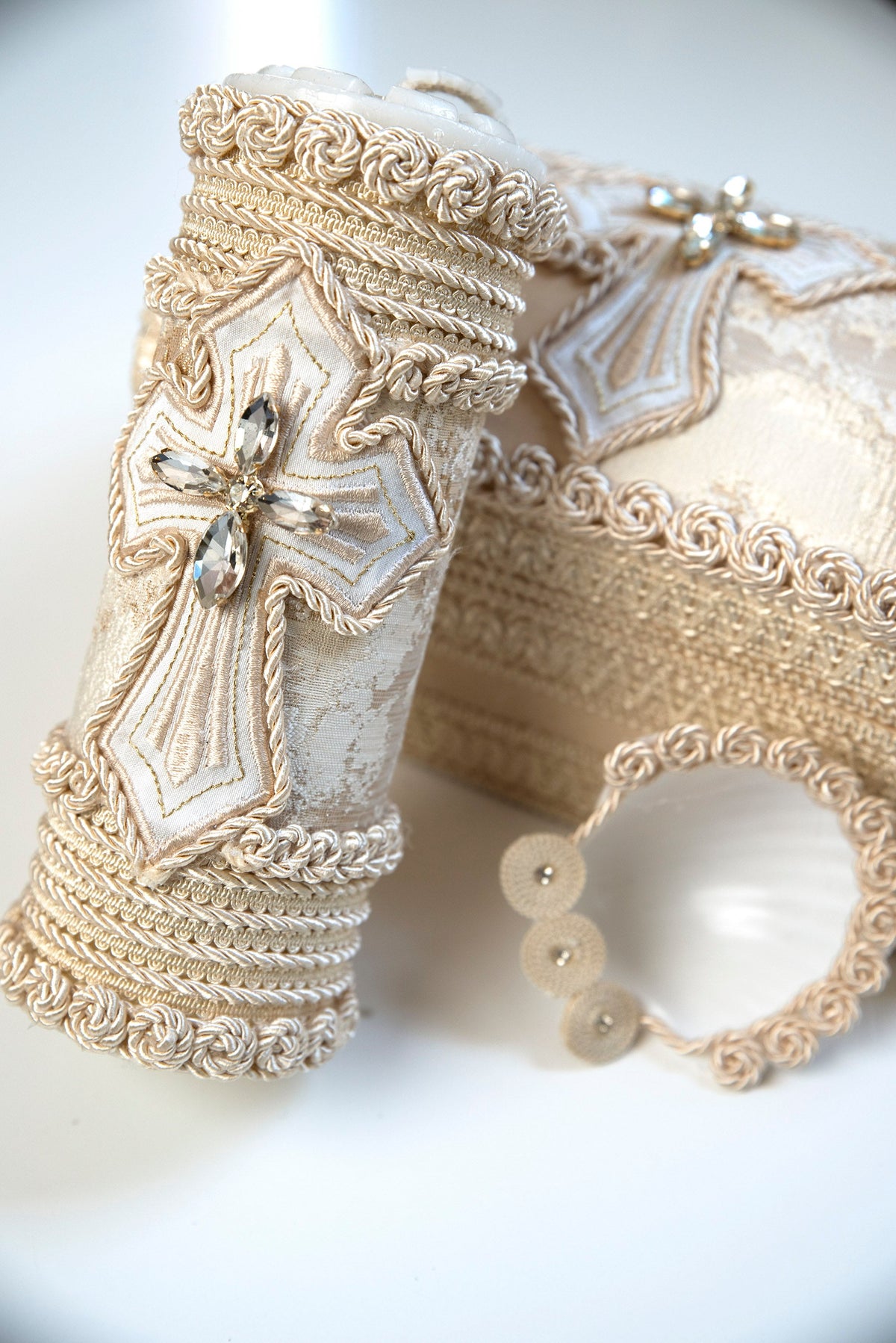
Some families bring a decorative shell as part of a keepsake set, while other parishes use their own vessel. A family shell is not required for a valid Baptism, so ask your parish before bringing one. Our Complete Baptism Checklist for Parents can help you prepare the remaining details.
2. Sacred Oil: Strength and the Holy Spirit
Families may see two different oils during a Catholic baptism. Before Baptism, the celebrant may use the oil of catechumens as a sign of preparation and strength. Depending on the rite and circumstances, a laying on of hands may be used instead.
After the water rite, the newly baptized is anointed with sacred chrism, a fragrant oil consecrated by the bishop. The Catechism explains that this signifies the gift of the Holy Spirit and incorporation into Christ, who is priest, prophet, and king.
The anointing is both tender and solemn. Its fragrance may fade, but the gesture points to a lasting identity: the child now belongs to Christ and the community of the Church.
3. The White Garment: “Putting On” Christ
The white garment signifies that the newly baptized has “put on Christ” and risen with him to new life. It is more than a beautiful family tradition.
For an infant, the garment may be a gown, dress, romper, suit, or a separate white cloth placed over the child. Some parishes provide this cloth, while others ask the family to bring one. White is traditional, but many families choose ivory—especially for silk, lace, and heirloom outfits. Confirm your parish’s expectations and choose clothing that keeps the child comfortable.

Explore Burbvus christening gowns and dresses for girls or baptism outfits and gowns for boys for complete, handcrafted ceremonial looks.
4. The Baptism Candle: The Light of Christ
The baptism candle is lit from the Paschal, or Easter, candle. It signifies that Christ has enlightened the newly baptized and calls the child to live as a child of the light. Parents and godparents accept the responsibility of helping that faith grow.
Some parishes provide a simple candle; others invite the family to bring one. Confirm the preferred size and style before purchasing. Decorations should never interfere with safe lighting or handling.

Burbvus handmade baptism candle sets offer coordinated ceremonial pieces for families who want an elegant keepsake. During the ceremony, follow the celebrant’s directions and keep the flame safely away from the child’s clothing and hair.
How the Four Symbols Tell One Story
- Water expresses cleansing, death and resurrection with Christ, and new birth in the Holy Spirit.
- Sacred oil signifies preparation, strength, consecration, and the gift of the Holy Spirit.
- The white garment shows that the baptized person has put on Christ.
- The candle represents the light of Christ and the call to live in that light.
For parents and godparents, these signs are also a reminder that Baptism begins a lifelong journey. The promises made that day continue through prayer, participation in parish life, and teaching the child by example.
Practical Preparation for Parents and Godparents
- Attend the parish preparation meeting and ask which items the church provides.
- Confirm whether you should bring a candle, white garment, shell, or baptism cloth.
- Try on the ceremonial outfit before the baptism day.
- Review who will hold the child and who will receive the candle.
- Store the garment and candle carefully after the ceremony if you want to preserve them as keepsakes.
Frequently Asked Questions
What is the central symbol of Catholic Baptism?
Water is central because the essential rite uses water together with the words spoken in the name of the Father, the Son, and the Holy Spirit.
Are the oil of catechumens and sacred chrism the same?
No. The oil of catechumens is associated with preparation and strength before Baptism. Sacred chrism is used afterward to signify the Holy Spirit and incorporation into Christ.
Can a baby wear ivory instead of white?
Many Catholic families choose ivory, particularly for silk and heirloom garments. Because parish practices differ and a separate white cloth may be used, confirm the details with your church.
Do we need to purchase every symbolic item?
Not necessarily. Many parishes provide some or all of the ritual items. Ask first so you know what is required, optional, or appropriate as a family keepsake.
A Meaningful Beginning
Water, oil, the white garment, and the candle turn a series of simple gestures into a beautiful proclamation of faith. When parents and godparents understand these signs, they can be more present to the sacrament—and the carefully chosen garments and keepsakes become loving companions to a grace-filled beginning.
Sources: Catechism of the Catholic Church, paragraphs 1234–1245; United States Conference of Catholic Bishops, The Sacrament of Baptism. Individual parish practices may vary.
Share:
The Complete Baptism Checklist for Parents